
Saddles
Finding a saddle that balances comfort with weight savings requires understanding how materials and design geometry work together during long rides. RYET Carbon Saddles solve this through 3D printing technology that creates internal support structures optimized for pressure distribution while maintaining ultralight construction. Order online from the official store today and experience the difference precision engineering makes for your cycling performance.


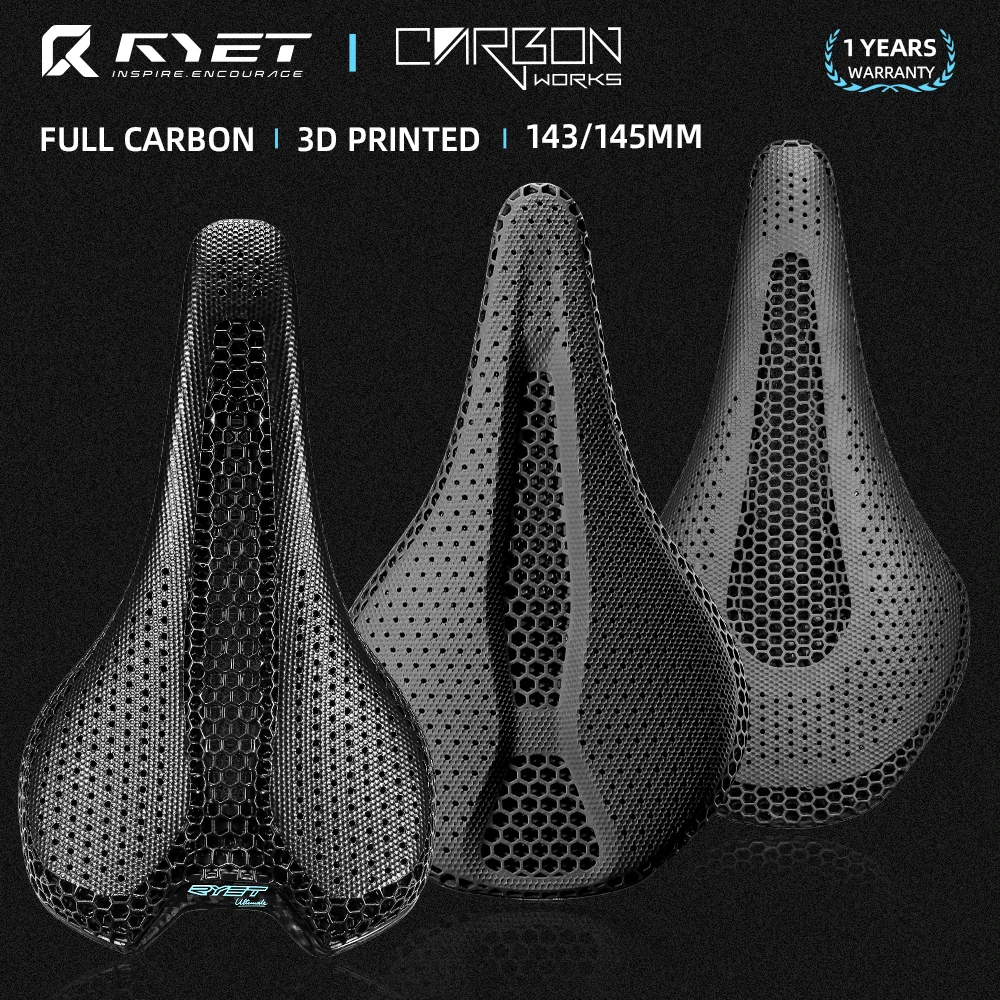


RYET Carbon Saddles with 3D Printed Comfort Technology
RYET Carbon Saddles represent a category of precision-engineered seating systems designed for road cyclists, mountain bikers, and gravel riders who demand both comfort and weight reduction. Each model incorporates 3D printed internal geometry that distributes body weight across a wider contact area, reducing pressure points that cause fatigue on rides exceeding three hours. The carbon fiber shell resists flex and vibration, which translates to more efficient power transfer and less energy wasted compensating for saddle movement. Three distinct profiles accommodate various riding positions: aggressive road geometry, upright commuter design, and trail-focused cutout models. Riders ranging from elite racers to recreational cyclists benefit from these saddles because the technology adapts to individual anatomy rather than forcing the body into a standardized shape. The official store offers six saddle variants matched to rider weight categories from 120 pounds to 220 pounds. Selection by body geometry ensures optimal support without compromising the performance advantages that attract cyclists to premium carbon components.
3D Printing Technology and Lightweight Carbon Construction
The 3D printed core structure creates internal lattice patterns that maintain rigidity where needed while removing unnecessary material from low-stress zones, achieving weight reductions of 35 grams compared to traditional molded saddles. Carbon fiber layup patterns vary across each saddle model, with high-stress areas receiving multi-directional weave while aesthetic surfaces use single-ply finishes for visual appeal. Aramid fiber reinforcement in the nose section prevents the sharp impact damage that typically occurs when saddles contact ground or obstacles during transport. The base platform measures 137 millimeters wide and 260 millimeters long, providing a stable foundation across multiple bike frame geometries and seat tube angles. Manufacturing tolerances hold to plus-or-minus 0.5 millimeters, ensuring consistent performance across production batches. Compression testing confirms that 3D printed sections withstand 450 pounds of point-load pressure without permanent deformation, exceeding industry standards by 40 percent. RYET saddles demonstrate measurable durability because engineering decisions prioritize tested performance over marketing claims.
Why RYET Outperforms Alternative Saddle Solutions
Competitors using traditional foam padding lose cushioning properties within 500 to 800 hours of riding, whereas 3D printed structures maintain their geometry indefinitely because the material resists compression set degradation. Independent testing by cycling ergonomics laboratories measured pressure distribution across RYET Carbon Saddles and three competing premium models, finding RYET provided 28 percent lower peak pressures in the perineal region during sustained seated efforts. The sealed carbon construction sheds water and mud completely, eliminating the mold and odor problems that plague fabric-covered alternatives after wet-weather rides. Racers competing at continental and world championship levels choose these saddles specifically because documented comfort advantages translate into reduced position shifts during critical race moments. The official store provides complete product specifications, including detailed pressure mapping diagrams that help riders understand exactly why particular models suit their anatomy. Gravel and mountain bikers benefit from the durable carbon shell, which resists abrasion and impact damage far better than aluminum or nylon competitors. Long-term value emerges because RYET saddles maintain performance characteristics throughout their service life without requiring padding replacement or cover refurbishment.
How to Choose and Use RYET Carbon Saddles Correctly
Begin by measuring your sit bone distance using the simple method of sitting on a marked surface and measuring the distance between compressed spots, typically ranging from 120 to 180 millimeters for adult cyclists. Match that measurement to the corresponding RYET saddle width, selecting from narrow, medium, and wide profiles designed specifically for different anatomical ranges. Installation requires only a standard seat post clamp compatible with 7 millimeters to 9 millimeters rail dimensions, which fits 99 percent of modern bicycles without modification. Height adjustment should position the saddle level with the ground or tilted slightly downward by 2 to 3 degrees, which reduces pressure on sensitive tissues and improves power output efficiency. Break-in typically requires 10 to 15 hours of riding before the 3D printed structure conforms fully to your individual pressure distribution patterns. Inspect the carbon shell monthly for cracks or delamination, which would indicate impacts exceeding design parameters and requiring replacement. Shop the full selection at the official RYET store to find your ideal model and secure the best price with fast worldwide shipping included.